
 Save to Pinterest
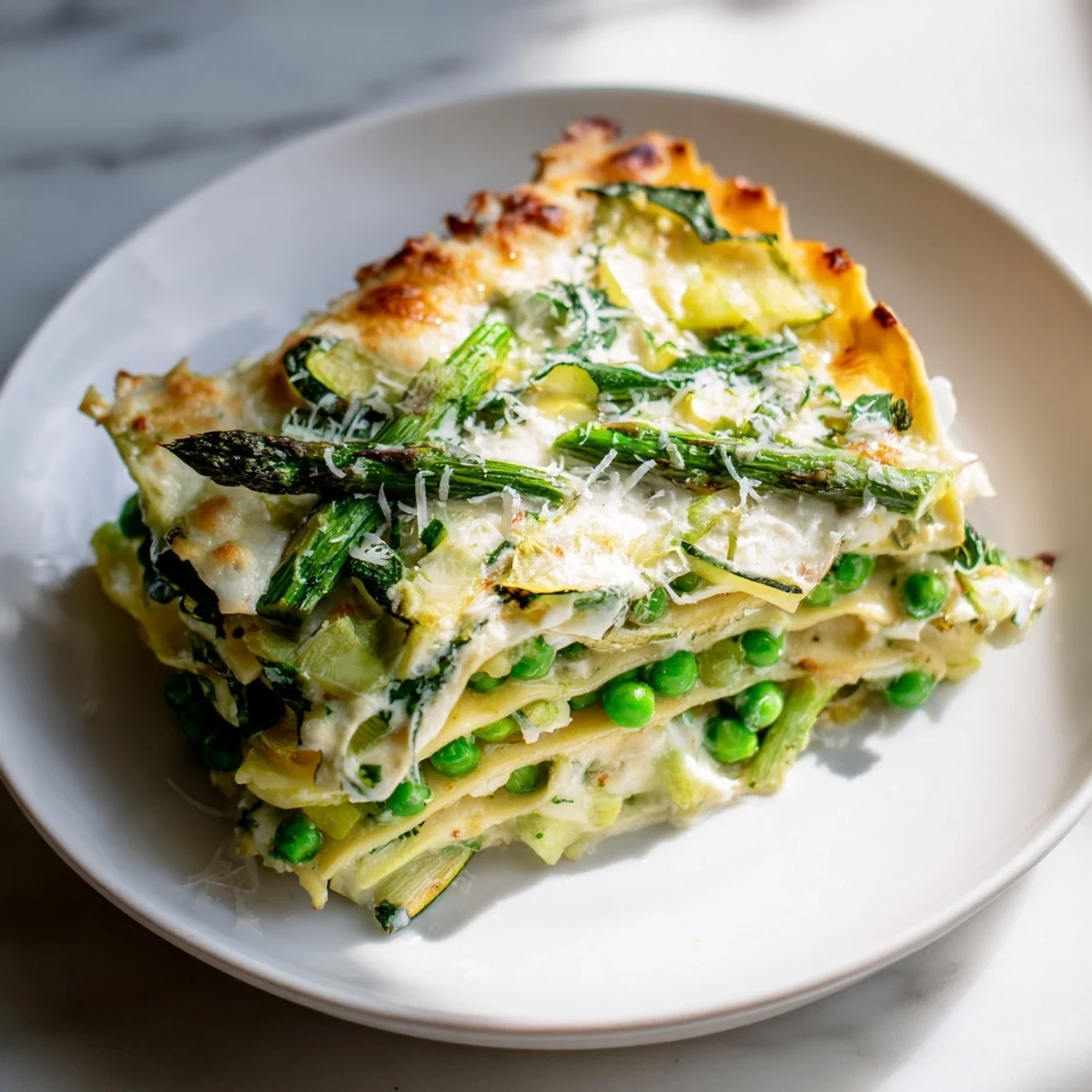
 This springtime dish combines tender asparagus, zucchini, spinach, and peas with a creamy béchamel sauce for rich, velvety layers. Fresh basil and parsley brighten the ricotta mixture while shredded mozzarella and Parmesan add melted richness. No-boil noodles speed assembly, and baking yields a golden bubbly finish. A delicate nutmeg note complements the sauce, and the balanced textures make it an elegant vegetarian centerpiece perfect for seasonal gatherings or a comforting meal.
The first time I made this lasagna was during a particularly rainy April when I was craving something comforting but not heavy. My grandmother had always insisted that lasagna needed meat sauce, but I could not stop thinking about all those bright green vegetables at the farmers market. I took a chance, and when it came out of the oven bubbling with that golden béchamel, even my skeptical Italian neighbor had to admit it worked. Now it is the dish I make when I want spring on a plate.
Last Easter, I made this for my family instead of the usual ham. My brother who claims to hate vegetables went back for thirds, and my mom asked for the recipe before she even finished her first serving. Something about the tender asparagus and sweet peas peeking through all that cheese just makes people happy.
Ingredients
- Unsalted butter: I always use unsalted so I can control the seasoning in the béchamel
- All-purpose flour: This creates the roux that thickens your white sauce into silky perfection
- Whole milk: Do not skimp here because the milk fat makes all the difference in a rich sauce
- Ground nutmeg: Just a pinch adds that subtle warmth that makes white sauce taste professional
- Olive oil: Use this to sauté the vegetables until they are just tender but still bright
- Asparagus: Trim the woody ends and cut into bite sized pieces so they cook evenly
- Zucchini: Thinly slice these so they soften nicely in the oven without becoming mushy
- Baby spinach: It wilts down to almost nothing so you can be generous with this
- Fresh or frozen peas: These add little bursts of sweetness throughout every layer
- Garlic: Minced fresh garlic gives the vegetables that aromatic backbone
- Scallions: These provide a mild onion flavor that does not overpower the delicate vegetables
- Whole milk ricotta: Room temperature ricotta mixes more smoothly into the filling
- Large egg: This binds the ricotta mixture so it does not separate during baking
- Grated Parmesan: Save some for the top because that creates the best crispy crust
- Shredded mozzarella: Whole milk mozzarella melts better than part skim for that classic cheese pull
- Fresh basil and parsley: Chop these right before mixing so they stay bright and flavorful
- No boil lasagna noodles: These are a game changer because they soften perfectly in the sauce
Instructions
- Preheat your oven:
- Set it to 375°F and grab your 9x13 baking dish, giving it a quick rub of butter or oil
- Make the béchamel:
- Melt butter in a saucepan, whisk in flour until it smells nutty, then slowly stream in the milk while whisking constantly
- Season the sauce:
- Add the nutmeg, salt, and pepper, then let it simmer until it coats the back of a spoon
- Sauté the vegetables:
- Heat olive oil in a large skillet and cook the asparagus, zucchini, and scallions until they start to soften
- Add remaining vegetables:
- Toss in the garlic, spinach, and peas for just a couple minutes so everything stays bright green
- Mix the ricotta filling:
- Combine ricotta, egg, half the Parmesan, and all those fresh herbs until smooth
- Start layering:
- Spread some béchamel on the bottom, then noodles, then ricotta, then vegetables, then more sauce and cheese
- Repeat twice more:
- Build two more identical layers, making sure to finish with plenty of sauce and cheese on top
- Bake until golden:
- Forty five minutes usually does it, but if you want extra crispiness hit it with the broiler for a couple minutes
- Let it rest:
- This is the hardest part but wait at least ten minutes before slicing or it will fall apart
 Save to Pinterest
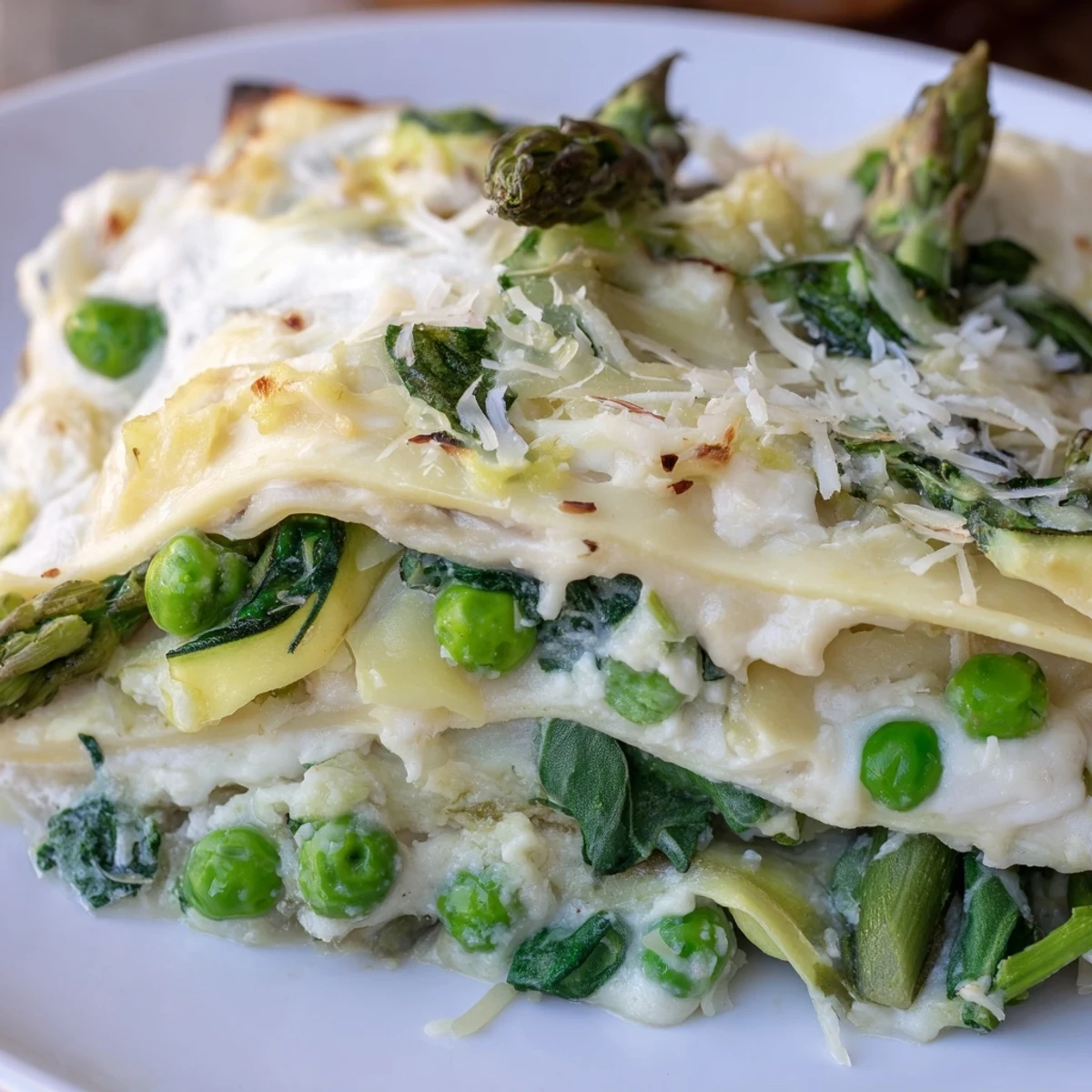
 This recipe taught me that vegetables can be just as comforting as any meat dish. There is something about slicing through those layers and seeing all those vibrant colors that feels like a celebration of the season.
Making It Your Own
I have found that this recipe is incredibly forgiving. Sometimes I swap in mushrooms or artichoke hearts depending on what I have on hand. The important thing is keeping the vegetables in bite sized pieces so they distribute evenly through every layer.
The White Sauce Secret
When I first started making béchamel, I was terrified of lumps. The trick I learned is to whisk constantly while adding the milk, and if you do get a few lumps, just give it a quick whirl with an immersion blender before assembling. No one will ever know.
Serving Suggestions
This lasagna is rich enough to stand on its own, but a simple green salad with lemon vinaigrette cuts through the creaminess beautifully. I also love serving it with crusty garlic bread to soak up any extra sauce on the plate.
- Let the lasagna come to room temperature before baking if you have assembled it ahead of time
- Cover with foil for the first thirty minutes of baking if the top is browning too fast
- This actually freezes beautifully unbaked, so you can assemble one now and save another for later
 Save to Pinterest
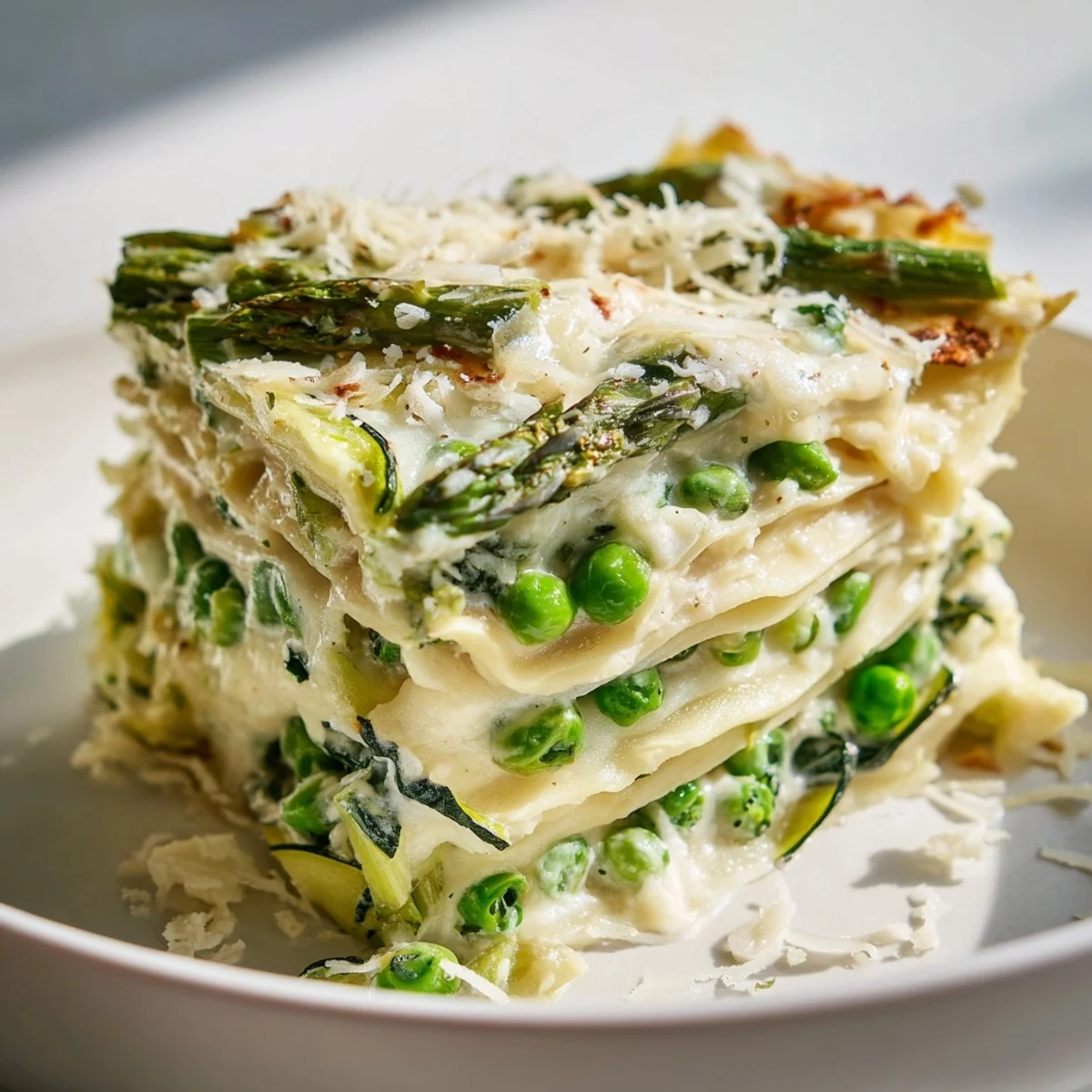
 Every time I make this, I am reminded that the best recipes are often the simplest ones. Hope this spring lasagna finds its way into your regular rotation too.
Recipe Questions & Answers
- → What vegetables are used in this lasagna?
-
Asparagus, zucchini, baby spinach, peas, garlic, and scallions are sautéed and layered to provide fresh spring flavors.
- → How is the white sauce prepared?
-
A classic béchamel is made by melting butter, whisking in flour, then gradually adding milk and seasoning with nutmeg, salt, and pepper until thickened.
- → Can this dish be made ahead?
-
Yes, it can be assembled and refrigerated before baking; just add extra baking time if going in cold.
- → What cheeses are included in the layers?
-
The layers include whole-milk ricotta, shredded mozzarella, and grated Parmesan for creamy, melty richness.
- → Are no-boil noodles required?
-
No-boil lasagna noodles are recommended for ease of preparation and to maintain the dish’s moisture balance.
- → What wine pairs well with this dish?
-
A crisp Sauvignon Blanc or a lightly oaked Chardonnay complements the creamy sauce and fresh vegetables harmoniously.