
 Save to Pinterest
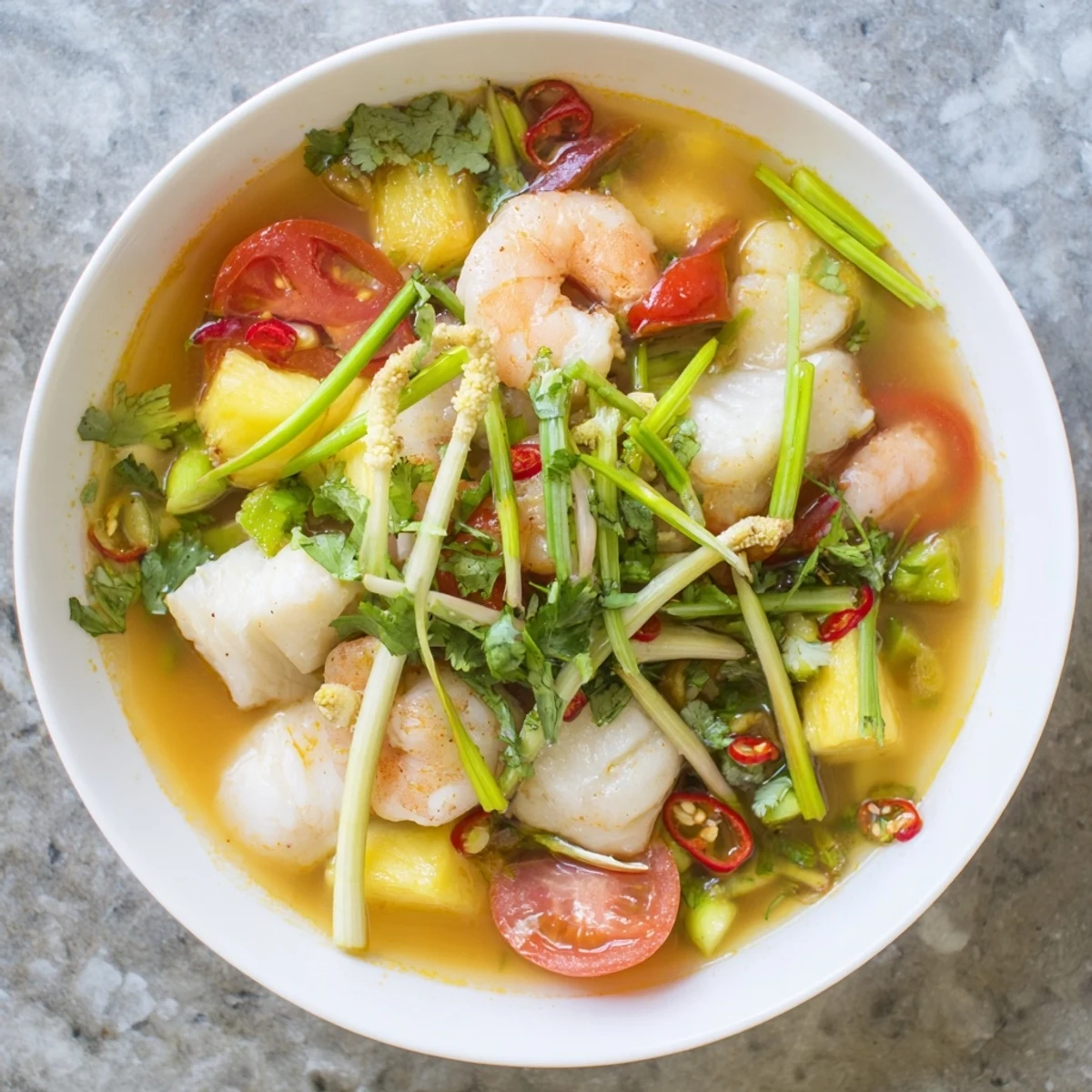
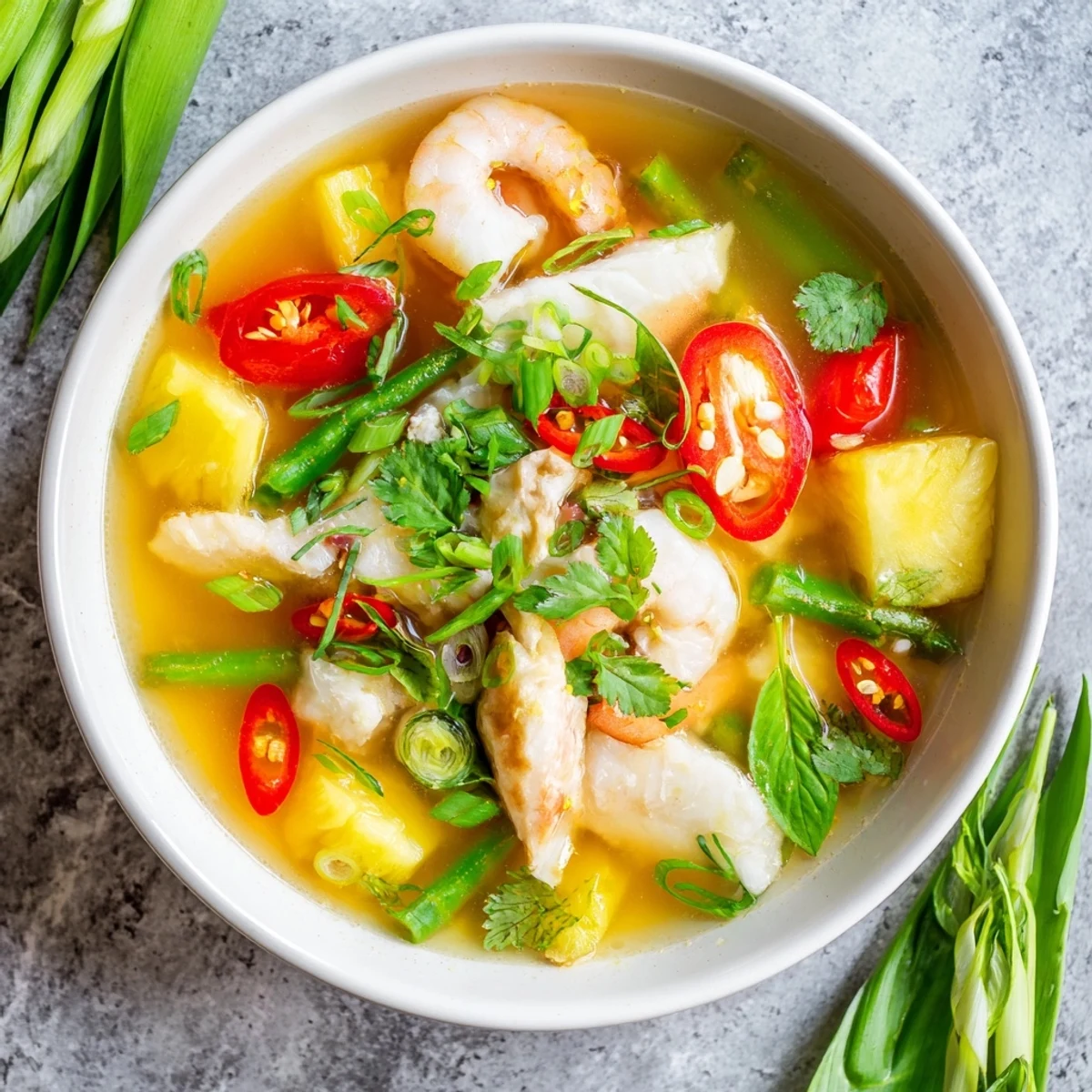
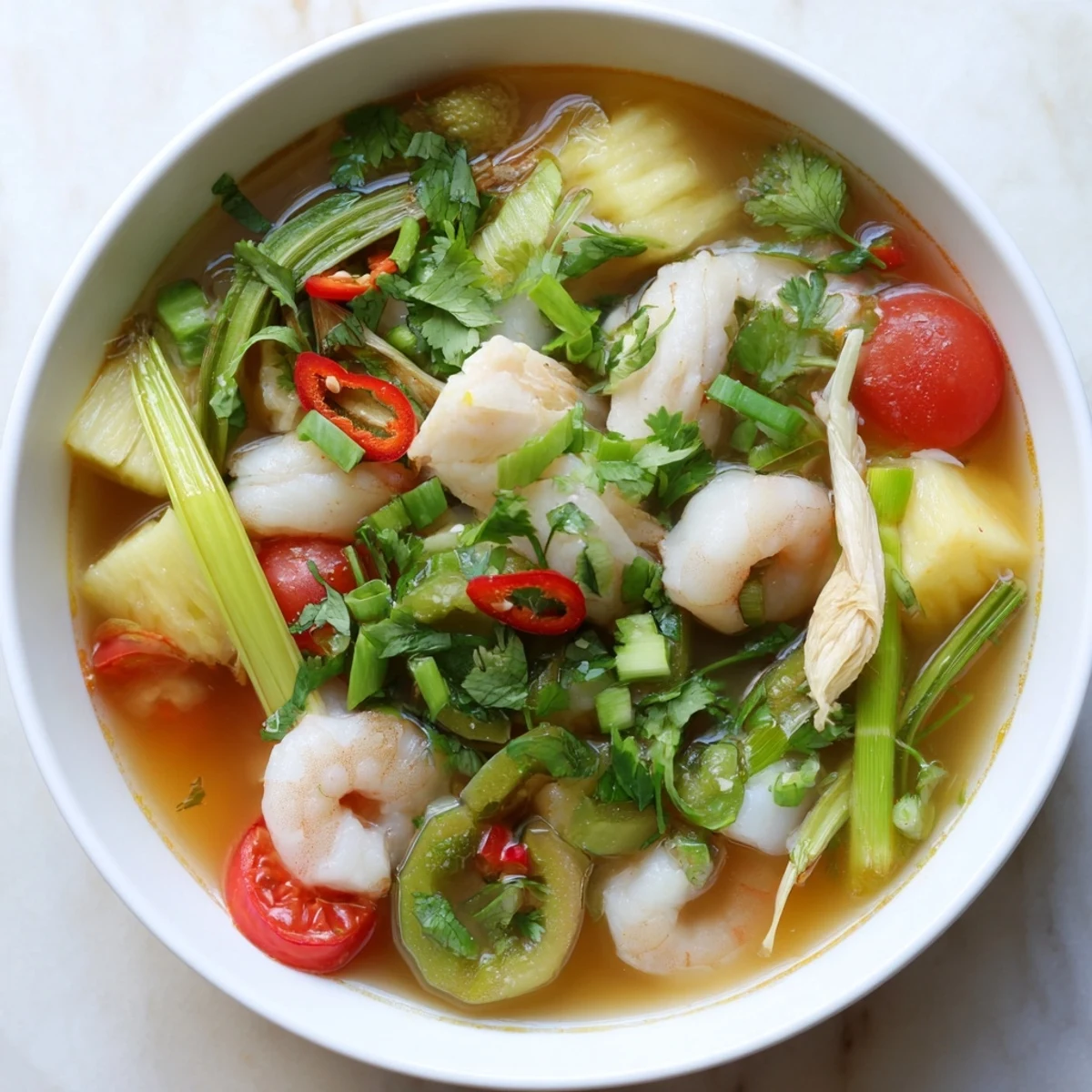
 Canh Chua is a beloved Vietnamese soup that embodies the perfect harmony of sweet, sour, and savory flavors. This aromatic broth features tender white fish and shrimp, complemented by pineapple's natural sweetness and the bright acidity of tamarind. Fresh vegetables like tomatoes, celery, and okra add texture, while fragrant herbs including cilantro, Thai basil, and lemongrass create layers of aromatic complexity.
The soup comes together in just 40 minutes, making it perfect for weeknight dinners yet impressive enough for guests. The tamarind base provides that characteristic tanginess that defines Canh Chua, while fish sauce adds depth and umami. Each spoonful delivers a comforting warmth that's both refreshing and satisfying.
Serve this steaming bowl over jasmine rice to soak up the flavorful broth, and adjust the spice level with fresh bird's eye chilies according to your preference. The soup naturally pairs well with crispy fried foods or can stand alone as a complete, nourishing meal.
The steam rising from my aunt's tiny kitchen in Saigon still haunts me in the best way possible. She made this soup look effortless, tossing ingredients into a battered aluminum pot while chatting away, never once measuring anything. The first time I tried recreating it alone in my cramped apartment, I called her three times in tears because the balance felt completely off.
My roommate walked in mid-simmer when I was finally getting the hang of it. The smell of lemongrass hitting hot oil stopped him in his tracks, and he ended up staying for dinner, eating three bowls straight without saying a word except occasional wow.
Ingredients
- White fish fillets: Catfish holds up beautifully but any mild white fish works, just don't overcook it or it'll fall apart completely
- Shrimp: Totally optional but adds that sweet seafood depth that makes the soup feel complete
- Pineapple: The sweetness here is nonnegotiable, fresh chunks break down slightly and infuse the broth
- Tomatoes: They'll soften into the soup, creating those little pockets of warm acidity
- Bean sprouts: Add them last for that essential crunch that cuts through the rich broth
- Okra: Some people love the slight thickness it adds, others skip it entirely, totally your call
- Lemongrass: Bruise those stalks hard with your knife handle or they won't release enough fragrance
- Tamarind paste: This is what gives Canh Chua its signature sour punch, start with less and work up
- Fresh herbs: Thai basil and cilantro are nonnegotiable, that aromatic finish is what ties everything together
Instructions
- Build your flavor base:
- Heat oil in your largest pot over medium heat, toss in minced garlic and sliced onions, let them sweat until translucent and fragrant, about 3 minutes, stirring occasionally so nothing catches.
- Wake up the aromatics:
- Add lemongrass pieces and tomato wedges, cook for another couple minutes until tomatoes start breaking down and releasing their juices.
- Create the broth:
- Pour in your water or fish stock, bring it to a gentle boil, then stir in tamarind paste and sugar, letting everything meld together for about 3 minutes.
- Add the vegetables:
- Toss in pineapple chunks, sliced celery, and okra if you're using it, let simmer for 5 minutes until pineapple starts softening slightly.
- Cook the seafood gently:
- Slide in fish chunks and shrimp carefully, keep the heat at a gentle simmer, cook for 5 to 7 minutes until seafood is just opaque, skim off any foam that rises to the top.
- Balance the flavors:
- Season with fish sauce, salt, and pepper, taste and adjust tamarind or sugar if needed, it should hit sweet, sour, and salty all at once.
- Finish with freshness:
- Stir in bean sprouts, all your chopped herbs, spring onions, and sliced chilies, simmer for just 1 to 2 more minutes, then remove from heat immediately.
 Save to Pinterest
 This soup became my go-to whenever someone needed cheering up. There's something about those hot, tangy, comforting flavors that feels like a hug, and watching someone's face light up after that first spoonful never gets old.
Finding the Right Fish
I've tried so many fish varieties over the years, and honestly, catfish remains my favorite for its slight sweetness and how it holds together. Tilapia works in a pinch, but something about how catfish chunks absorb that tangy broth while staying firm is absolute perfection.
The Herb Situation
Fresh herbs are absolutely nonnegotiable here, and I learned this the hard way when I tried making it with dried herbs once. The combination of Thai basil, cilantro, and those fragrant rice paddy herbs if you can find them is what elevates this from good soup to something transcendent.
Making It Ahead
This soup actually tastes better the next day when flavors have had time to marry, but hold off on adding fish and bean sprouts until reheating. Store the broth base separately and finish it fresh when you're ready to eat.
- Make extra broth base and freeze portions for quick weeknight meals
- Prep all your vegetables the night before to make weeknight cooking faster
- The herbs must be added at the very end or they'll turn dark and sad
 Save to Pinterest
 There's something profoundly healing about a bowl of Canh Chua, the way hot, sour, sweet, and fresh come together in perfect harmony. I hope this recipe brings as much comfort to your kitchen as it has to mine over the years.
Recipe Questions & Answers
- → What makes Canh Chora uniquely Vietnamese?
-
Canh Chua embodies Vietnam's culinary philosophy of balancing five flavors: sweet, sour, salty, bitter, and umami. The combination of tamarind's natural acidity, pineapple's sweetness, and fish sauce's savory depth creates this distinctive flavor profile that Vietnamese cuisine celebrates.
- → Can I make Canh Chua vegetarian?
-
Absolutely. Substitute fish with firm tofu cubes and replace fish stock with vegetable broth. Use soy sauce or mushroom seasoning instead of fish sauce for that savory element. The soup remains delicious while accommodating plant-based diets.
- → What fish works best in Canh Chua?
-
White fish fillets with firm flesh like catfish, snapper, tilapia, or sea bass hold up beautifully during simmering. These mild-flavored fish absorb the aromatic broth while maintaining their texture. Catfish is traditionally preferred in Vietnam.
- → How do I achieve the perfect sweet-sour balance?
-
Start with the recommended amounts of tamarind paste and sugar, then taste and adjust incrementally. Add more tamarind for increased sourness or sugar for sweetness. The ideal Canh Chora should have a pleasant tang without being overwhelmingly sharp, with sweetness rounding out the flavors.
- → Can I prepare Canh Chora in advance?
-
The broth base can be made ahead and refrigerated for up to 2 days. However, add the seafood and fresh herbs just before serving to maintain their texture and vibrant appearance. Reheat gently to avoid overcooking the fish.
- → What herbs are essential for authentic Canh Chora?
-
Thai basil and rice paddy herb (ngò om) are traditional and provide authentic flavor. Cilantro adds freshness, while sawtooth herb contributes a unique peppery-citrus note. If unavailable, substitute with regular basil and extra cilantro, though the flavor profile will differ slightly.