
 Save to Pinterest
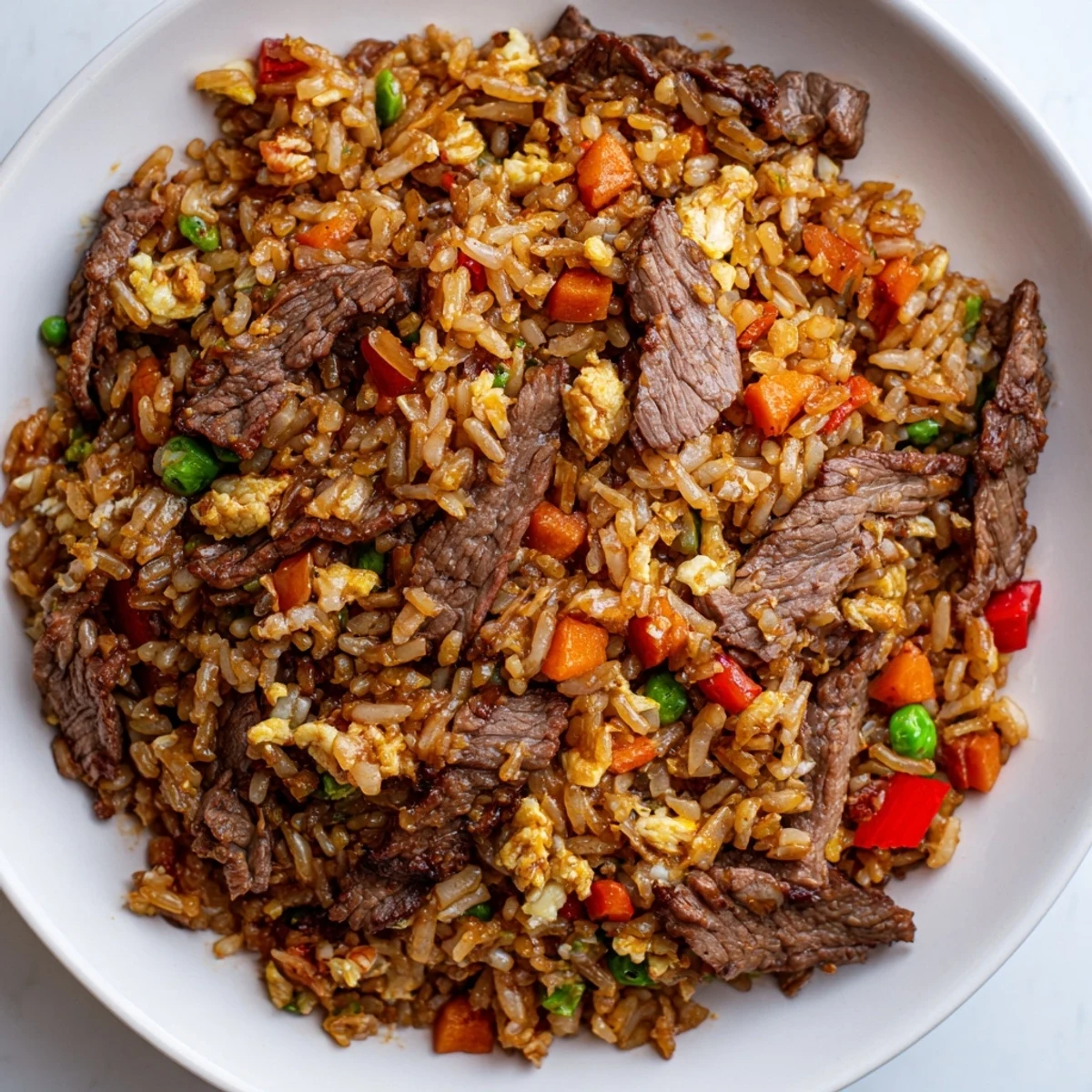
 Enjoy a quick and delicious stir-fry combining tender, marinated beef strips with fragrant jasmine rice and vibrant vegetables. The dish balances soy and oyster sauces with aromatic garlic, ginger, and spring onions. Perfect for busy nights, it delivers a satisfying blend of rich, savory flavors and crisp textures.
Preparation is straightforward: marinate the beef briefly, then stir-fry it separately before cooking vegetables and rice together. Reintroduce the beef and toss all ingredients with flavorful sauces. This dish is versatile and can be adapted with chicken, shrimp, tofu, or added scrambled eggs for variety.
The first time I made beef fried rice at home, I was trying to recreate what I'd eaten at my favorite corner restaurant downtown, the one where the chef would toss everything in a massive wok with such confidence that the rice never seemed to stick. I realized that afternoon, with my modest skillet and day-old rice from the fridge, that the magic wasn't about fancy equipment or a professional stove—it was about understanding that every ingredient needed its moment, its own quick kiss of heat. Now I make this dish when I want something that tastes impressive but doesn't demand hours of prep or a grocery list longer than my arm.
I made this for my roommate on a Wednesday night when she came home exhausted from back-to-back meetings, and I watched her face change the moment she tasted it—not because it was complicated, but because it tasted like someone had taken care in making it for her. That's when I understood why fried rice matters: it's not pretentious, it's generous.
Ingredients
- Beef sirloin or flank steak, thinly sliced (300 g): Slice against the grain so each piece stays tender even after quick cooking, and thin enough that it cooks through in seconds rather than turning chewy.
- Soy sauce: Use it twice—once to marinate the beef and again in the final sauce—because it builds flavor in layers.
- Cornstarch and sesame oil for the beef: These create a silky coating that keeps the meat from sticking and adds a subtle richness.
- Cooked jasmine or long grain rice, day-old (3 cups): This is non-negotiable; fresh, warm rice will turn into mush, but cold rice from yesterday stays individual and separate when stir-fried.
- Carrot and red bell pepper, diced: The colors matter here not just for looks but because red peppers are sweeter and slightly softer than other varieties.
- Green peas, fresh or frozen (100 g): Frozen actually works beautifully because they hold their texture and don't release excess water.
- Spring onions, separated: The white parts go in early to infuse the oil, and the green tops scatter on at the end for freshness and crunch.
- Garlic and fresh ginger, minced: Fresh is essential here; the aromatics need to hit your nose the moment they hit the heat, and that's where the whole dish begins to sing.
- Oyster sauce and toasted sesame oil: These are the backbone of flavor—the oyster sauce adds umami depth and the toasted oil brings a nutty finish that ties everything together.
- Vegetable oil: Use a neutral oil with a high smoke point so it doesn't burn when the wok gets screaming hot.
Instructions
- Marinate the beef:
- Toss your sliced beef with soy sauce, cornstarch, sesame oil, and black pepper in a bowl and let it sit for 10 minutes while you prep everything else. This isn't wasted time; the cornstarch creates a protective coating that keeps the meat tender, and the soy begins the seasoning from the inside.
- Sear the beef quickly:
- Heat 1 tbsp oil in your wok over high heat until it shimmers—you want it hot enough that the beef makes a quiet sizzle when it hits the surface. Cook for just 2–3 minutes, moving it constantly, until the edges are browned but the center is still soft, then push it to a plate.
- Build the aromatics:
- Add the remaining oil to the empty wok, then immediately add garlic, ginger, and the white parts of spring onions. Stir constantly for 30 seconds; your kitchen should suddenly smell incredible, which is exactly how you know you're on the right track.
- Cook the vegetables:
- Add carrots first since they take longest, stir-frying for 2 minutes until they start to soften at the edges but still feel firm when you press them with the spatula. Then add the bell pepper and peas, cooking for another minute just until everything is hot and the pepper has a slight curve but isn't limp.
- Combine with rice:
- Push everything to the sides of the wok and add the cold rice to the center. It'll seem like a solid block at first, but break it up with your spatula, scraping the bottom and folding it over itself. After 2–3 minutes of constant stirring, every grain should be separate and lightly coated with the oil and vegetables.
- Bring it together:
- Return the beef to the wok, then drizzle in the soy sauce, oyster sauce, and toasted sesame oil. Toss everything for about 2 minutes until the sauce coats every grain and the beef is reheated through. If it looks dry, you haven't tossed enough; keep moving it until it glistens but isn't wet.
- Finish fresh:
- Scatter the green parts of the spring onions across the top right as you're lifting it off the heat, so they stay bright and crisp. Serve immediately while everything is still steaming.
 Save to Pinterest
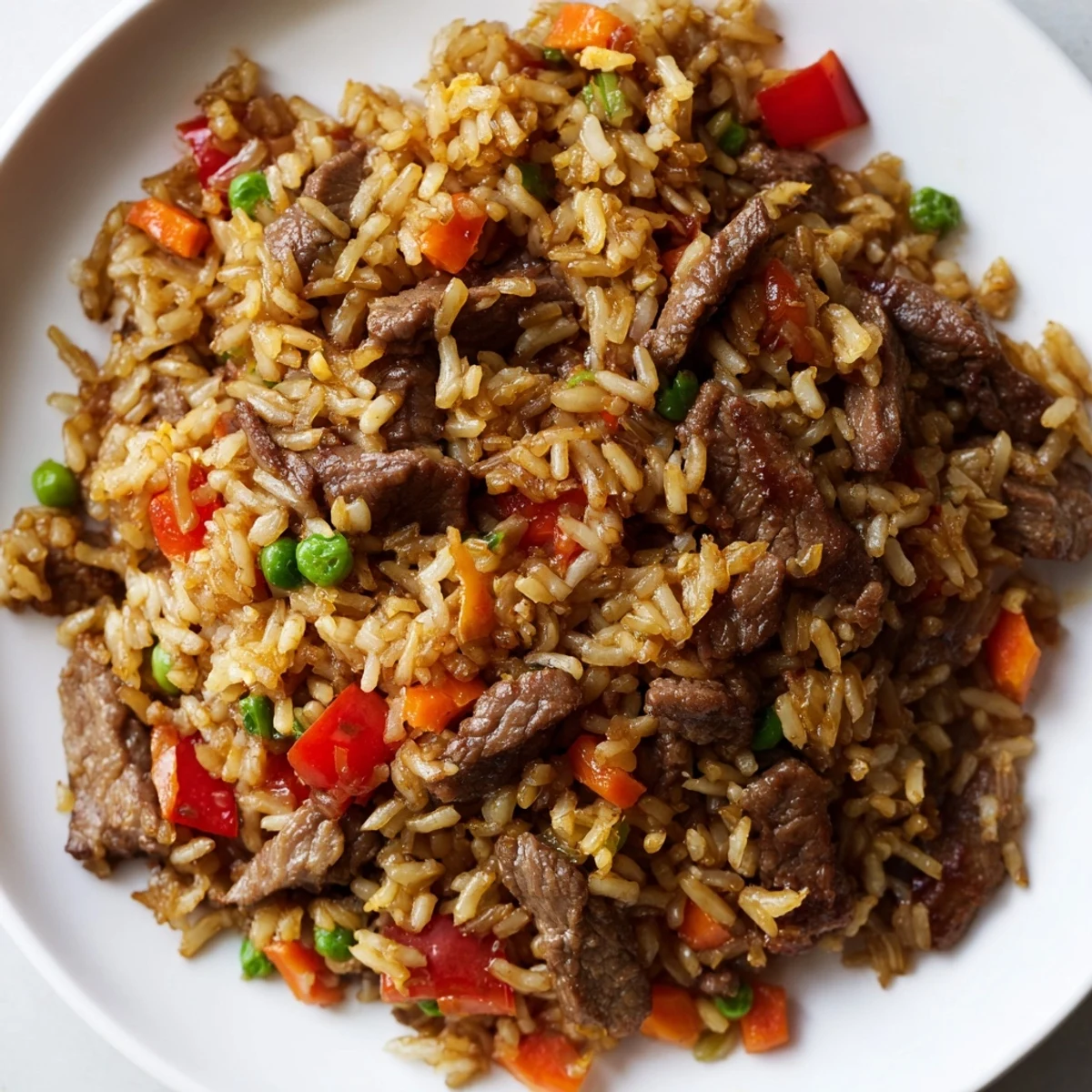
 The moment when everything comes together in the wok—when you can see the beef glistening again, the vegetables are warm, and the rice is coated in sauce—that's when you understand why this dish has been made in kitchens across Asia for generations. It's not fancy, but it's complete.
Why Day-Old Rice Changes Everything
I learned this the hard way by trying to make fried rice with rice that came straight from the rice cooker, warm and steaming. It turned into a sticky, clumpy mess no matter how hard I stirred or how hot my wok was. But when I used rice that had been sitting in my fridge overnight, the grains had firmed up and separated, and suddenly everything worked. The cold rice doesn't absorb as much oil and sauce, so it stays light and individual. Plan ahead if you can—a single day makes the entire difference between success and disappointment.
The Power of the High Heat Wok
A wok with genuinely high heat is what gives fried rice that slightly charred, aromatic quality that makes people ask what restaurant you ordered from. A regular skillet can work in a pinch, but it doesn't get quite as hot and the flat bottom means less of the surface touches the oil, so you lose some of that toast and fragrance. If you're using a wok, get your heat up there and don't be shy about it; the quick cooking is what keeps vegetables crisp and beef tender.
Customization and Variations
This recipe is forgiving enough that you can swap almost anything around and still end up with something delicious. Chicken thighs work beautifully, shrimp only needs 1–2 minutes, and tofu gains a wonderful texture when you press it first and let it crisp in the hot oil. Some nights I scramble an egg in the wok at the very beginning, push it aside, and fold it back in at the end for richness. Some mornings I add a diced chili or a splash of chili sauce if I want heat, or a splash of fish sauce if I'm chasing that deeper umami flavor.
 Save to Pinterest
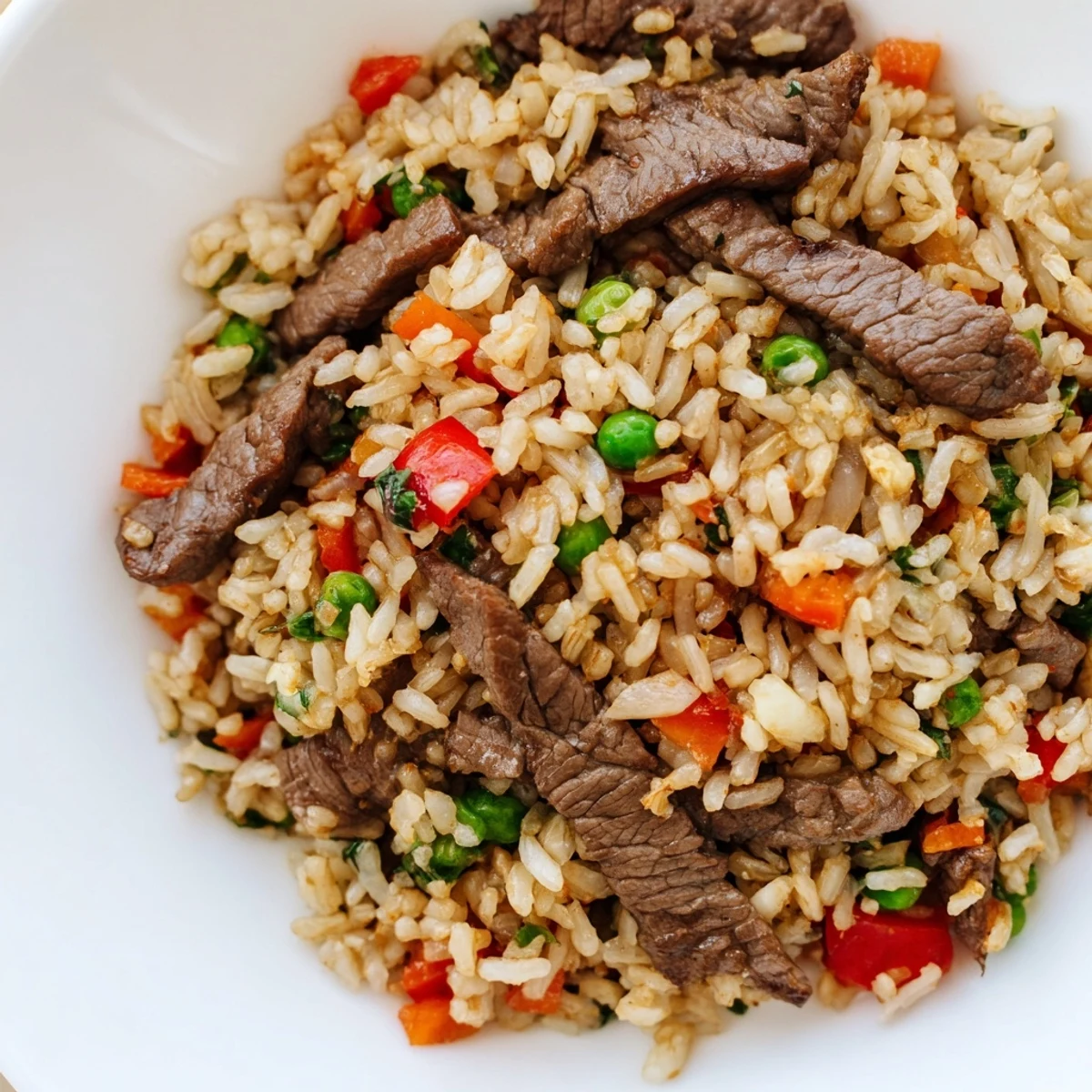
 This is a dish that rewards practice more than precision, so don't worry if your first attempt isn't perfect. Every time you make it, you'll understand a little better how hot your wok needs to be and how long each vegetable takes, and eventually you'll make it with your eyes closed.
Recipe Questions & Answers
- → What type of rice works best?
-
Day-old jasmine or long-grain rice is ideal as it prevents clumping and fries evenly for a better texture.
- → How do I make the beef tender?
-
Marinating thinly sliced beef in soy sauce, sesame oil, and cornstarch for about 10 minutes helps tenderize it and adds flavor.
- → Can I substitute the beef?
-
Yes, chicken, shrimp, or tofu can be used instead for different variations while keeping the dish flavorful.
- → What oils are recommended for stir-frying?
-
Vegetable oil is preferred for high-heat stir-frying, while toasted sesame oil adds depth when added toward the end.
- → How to add spice to this dish?
-
Adding chopped chili or a dash of chili sauce during cooking will introduce a spicy kick to suit your taste.