
 Save to Pinterest
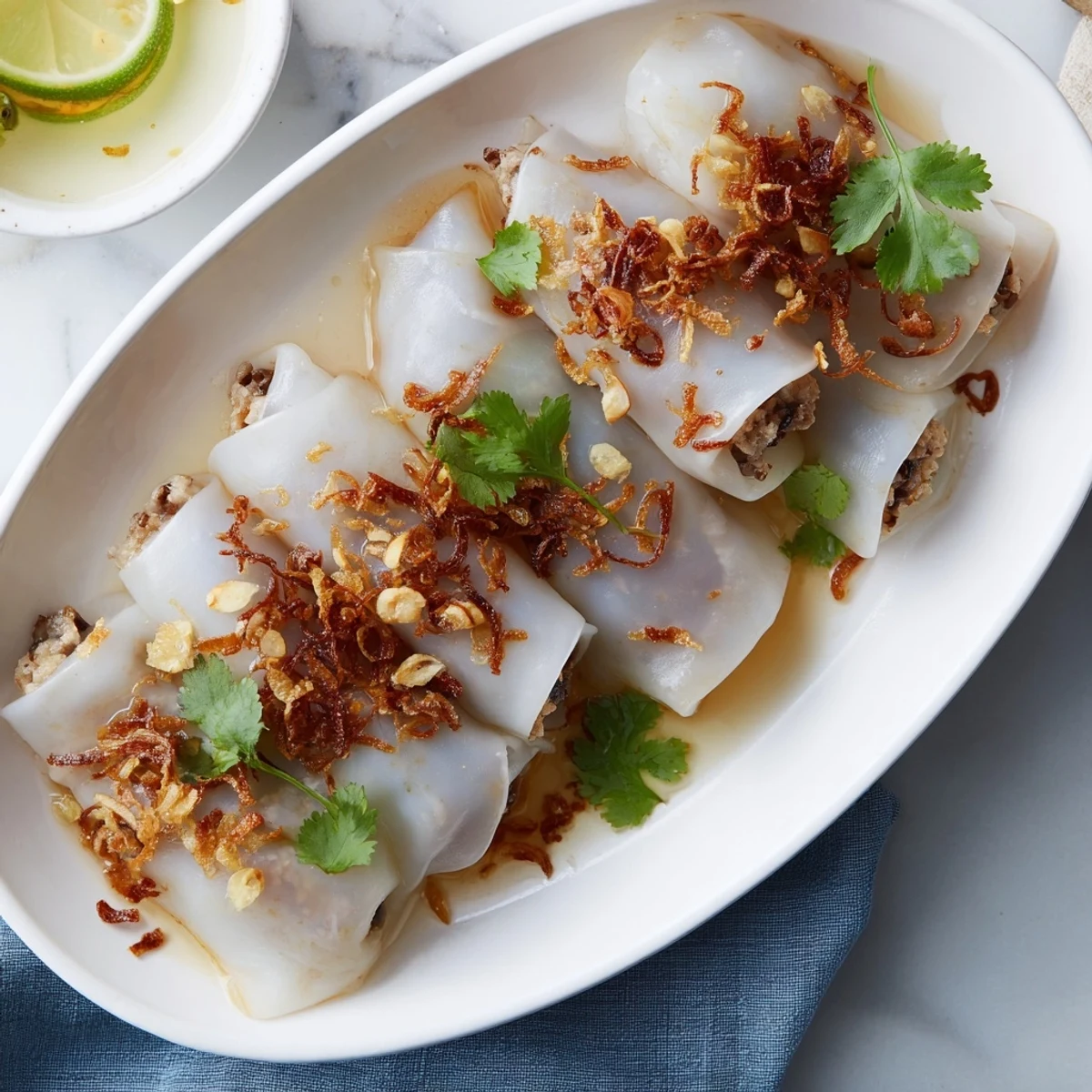
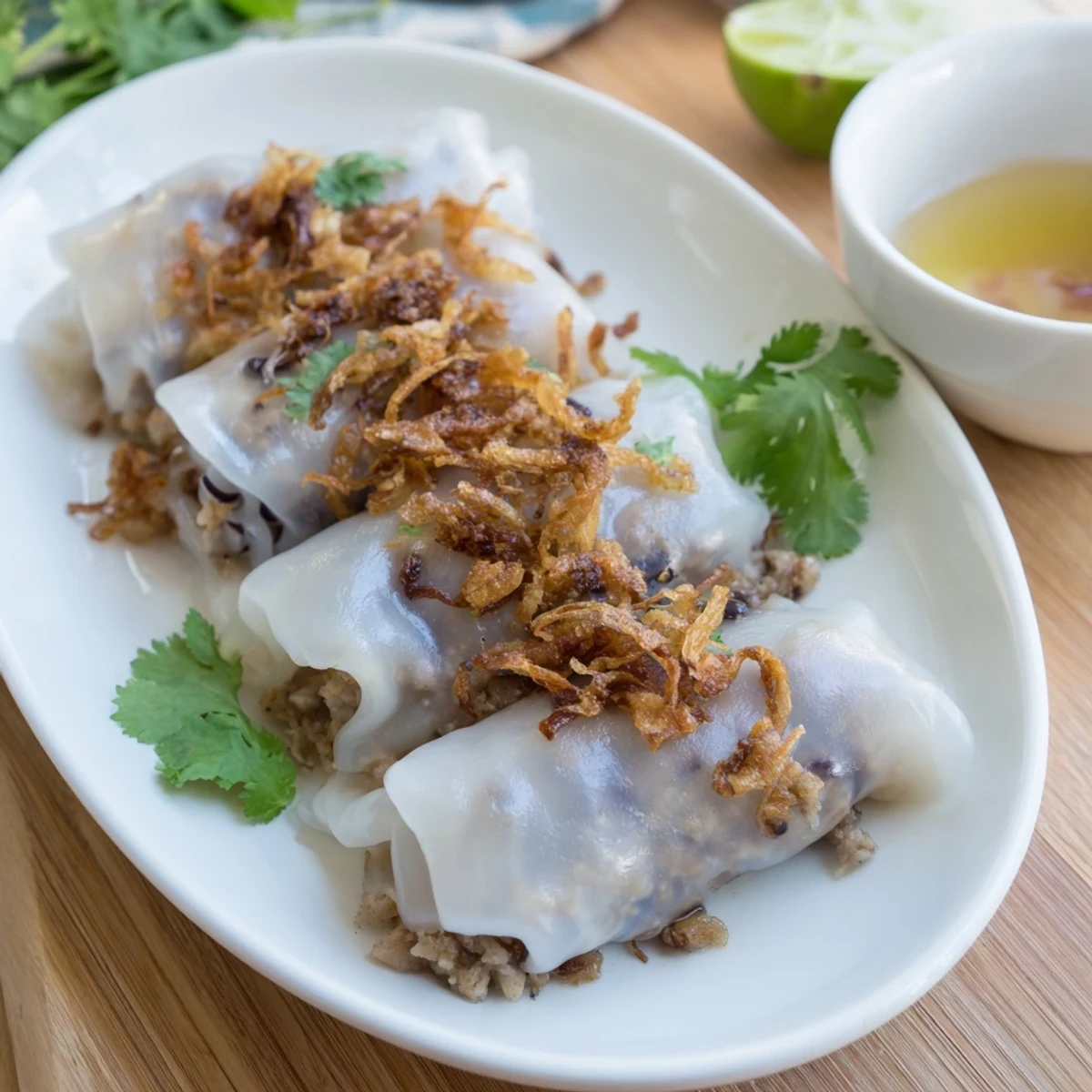
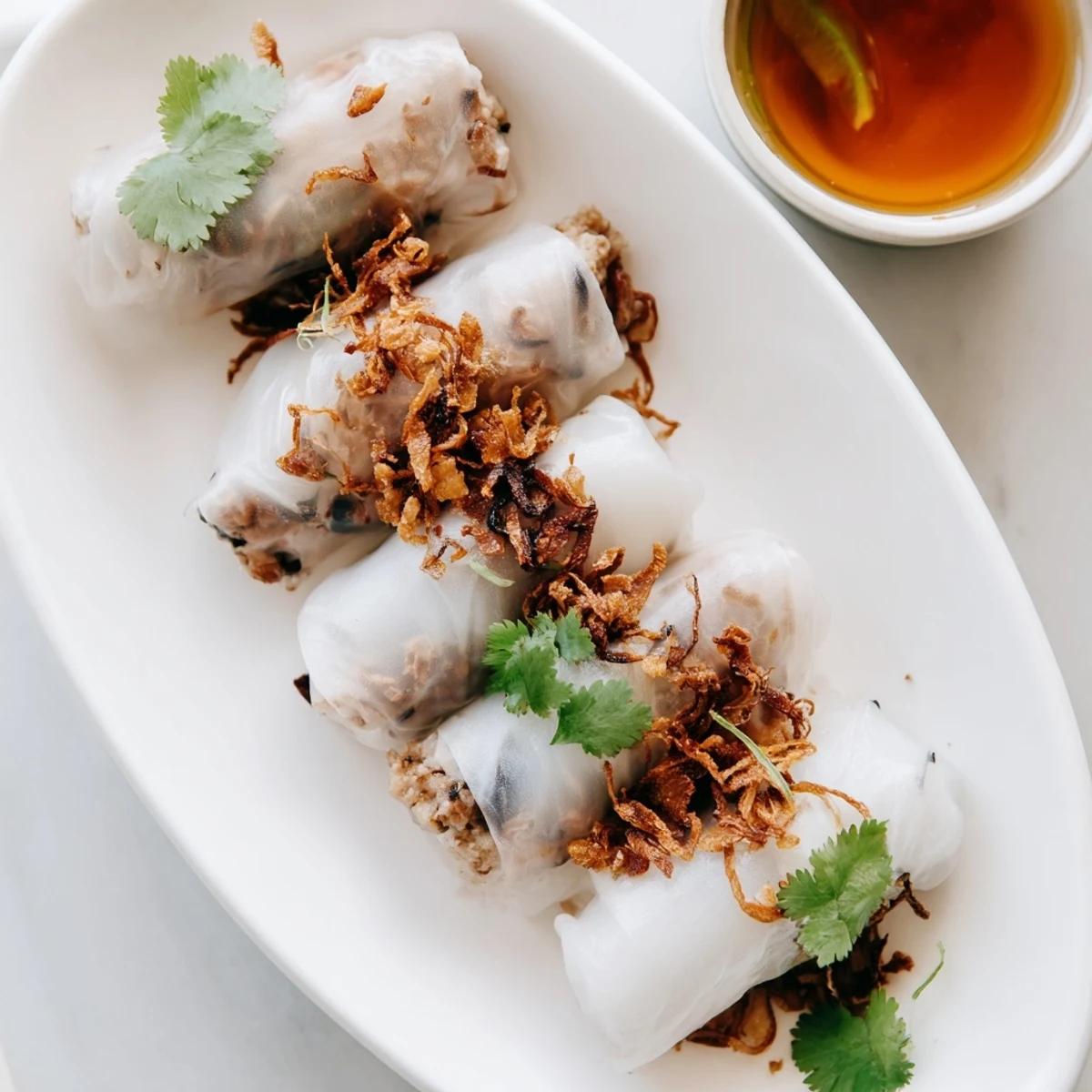
 Banh Cuon features silky, translucent rice sheets steamed to perfection and wrapped around a savory filling of ground pork, wood ear mushrooms, and aromatics. These delicate rolls showcase Vietnamese culinary finesse, requiring just the right batter consistency and deft handwork. The finished dish gets topped with fried shallots, fresh cilantro, bean sprouts, and cucumber, then served alongside a balanced nuoc cham dipping sauce that ties everything together. Perfect for breakfast or as a light meal, these rolls offer a beautiful contrast of textures—soft, silky wrapper meets tender, savory filling with crisp, refreshing garnishes.
The first time I ate Banh Cuon was at my aunt's house in Hanoi, steam still rising from the kitchen as she rolled these delicate silk parcels one by one. I watched her hands move so quickly, convinced it would take years to master that rhythm. Turns out, the secret isn't speed at all.
Last Sunday morning, I made a double batch because my neighbor smelled the garlic frying and wandered over with fresh cilantro from her garden. We stood around the steamer, taking turns ladling batter and watching it turn from milky white to almost-transparent in seconds. Some came out lumpy, some tore, but we ate the mistakes anyway, laughing through the warm imperfect ones.
Ingredients
- Rice flour: The foundation of that signature delicate texture, don't substitute wheat flour here
- Tapioca starch and cornstarch: These create the stretchy silkiness that makes Banh Cuon so irresistible
- Ground pork: Fat content matters here, dont use extra lean or the filling will taste dry
- Dried wood ear mushrooms: Soak them until plump, they bring this incredible earthy crunch to every bite
- Fish sauce: The umami backbone that ties everything together
- Fried shallots: Dont skip these, they add the most glorious crispy sweetness on top
Instructions
- Whisk your batter into silk:
- Combine rice flour, tapioca starch, cornstarch, salt, water, and vegetable oil until completely smooth. Let it rest for at least 20 minutes so the starches can hydrate properly.
- Cook the savory filling:
- Heat oil in a skillet and sauté onions and garlic until fragrant. Add ground pork and cook until browned, then stir in chopped wood ear mushrooms, fish sauce, and pepper for 2 to 3 minutes.
- Mix the dipping sauce:
- Whisk fish sauce, lime juice, sugar, and warm water until dissolved. Add minced garlic and sliced chili, then adjust to your taste.
- Steam each rice sheet:
- Ladle a thin layer of batter onto an oiled cloth or silicone tray over boiling water. Swirl to coat evenly, cover, and steam for 1 to 2 minutes until set and slightly translucent.
- Roll and fill:
- Gently lift each cooked sheet onto an oiled plate using a thin spatula. Place filling along one edge and roll up tightly before repeating.
- Gather everyone around:
- Arrange rolls on a platter and top generously with fried shallots, cilantro, bean sprouts, cucumber, and sliced pork sausage if desired. Serve with plenty of nuoc cham on the side.
 Save to Pinterest
 My cousin once tried to make Banh Cuon for a family dinner and forgot to oil the steaming cloth. We spent the evening scraping stuck rice bits off the fabric and eating the filling with rice bowls instead, which honestly became its own kind of wonderful memory. Sometimes the kitchen disasters are the ones we talk about years later.
Getting That Wrapper Just Right
The wrapper should be thin enough to see the filling through it, almost translucent around the edges. If yours are coming out too thick, add another tablespoon of water to the batter and try again. Learning to judge that perfect swirl of batter takes practice, but youll develop a feel for it.
The Art of Timing
Work quickly once you start steaming, because the batter settles and the filling cools. Set up your station with everything within arms reach before you turn on the heat. I learned this the hard way after making three trips across the kitchen while my first sheet overcooked into rubber.
Serving It Up
These rolls deserve to be the star of the table, not a side dish. Arrange them on a large platter with all the garnishes in separate bowls so everyone can customize their own. The visual feast is half the experience.
- Keep leftover batter covered if you take breaks, it develops a skin on top
- If your first few rolls tear, eat them anyway and adjust your technique
- That dipping sauce should be tangy and bright, dont be afraid of the lime
 Save to Pinterest
 Theres something meditative about standing over the steamer, watching each sheet transform, and rolling these little gifts by hand. Maybe thats why Banh Cuon tastes like home.
Recipe Questions & Answers
- → What makes Banh Cuon different from other rice rolls?
-
Banh Cuon stands out for its exceptionally thin, delicate, and translucent rice wrapper that's steamed rather than fried or boiled. The batter must be precisely thin and smooth to achieve the signature silky texture that sets these rolls apart from other Vietnamese rice preparations.
- → Can I make Banh Cuon without a traditional steamer?
-
Yes, you can use a nonstick pan with a lid. Lightly oil the pan, pour a thin layer of batter, swirl to cover the surface, cover with the lid, and steam for 1-2 minutes until set. The key is maintaining the thin batter consistency and gentle steaming method.
- → How do I achieve the perfect batter consistency?
-
The batter should be thin and smooth, similar to crepe batter. It needs to be lump-free and have enough liquid to spread thinly across your steaming surface. Letting it rest for 20 minutes helps achieve the right texture. If it's too thick, add water a tablespoon at a time.
- → Can Banh Cuon be made in advance?
-
Banh Cuon is best served immediately while the rice wrappers are still soft and silky. However, you can prepare the filling and dipping sauce ahead of time. The wrappers tend to dry out and lose their delicate texture if refrigerated, so it's recommended to steam and assemble just before serving.
- → What can I substitute for ground pork?
-
For a vegetarian version, use crumbled firm tofu or mashed seasoned mushrooms. You can also substitute ground chicken, shrimp, or a combination. Adjust seasonings accordingly and consider using vegetarian fish sauce to maintain the authentic flavor profile while accommodating dietary preferences.
- → How do I store leftover Banh Cuon?
-
Store components separately in airtight containers in the refrigerator for up to 2 days. Keep the filling, dipping sauce, and garnishes apart. To reheat, gently steam the rice rolls for 30-60 seconds to soften them again, though fresh preparation always yields the best texture and experience.